The little c that makes a big difference
Generating ideas has become significantly easier. A good headline? Twenty suggestions in ten seconds. Image concepts, claims, storyboards or styles? The same. Generative AI has vastly expanded the space of possible solutions in a very short time.
This makes another question more interesting: what distinguishes a possible idea from the right one? In creativity research, there is a term that describes surprisingly well what professional creative work entails: Pro-c.
Something is missing between everyday and genius
In their Four-C model, James C. Kaufman and Ronald A. Beghetto distinguish four forms of creativity.
mini-c describes personal discoveries and insights that are new to the individual. little-c represents everyday creativity – an original solution, a good improvisation, a new thought. Big-C refers to the rare creativity that shapes an entire field.
Between these lies Pro-c: professional-level creativity, developed through experience, knowledge, practice, and prolonged engagement with a subject.
For agency work, this is a highly useful category. After all, clients rarely expect the history of design to be rewritten with every commission. What is expected is something more challenging: reliably arriving at a surprisingly good solution under very specific conditions.
From personal discoveries to field-defining genius – professional creativity (Pro-c) is the foundation of effective agency work.
When ideas become cheap, judgement becomes more valuable
Generative AI is shifting some creative tasks. Creating variations used to be complex; now, a simple prompt often suffices.
This is progress: we can experiment faster, test different directions, visualise ideas, and discard concepts before investing valuable time in their development. However, it also generates a flood of responses.
But which of these responses truly fits the brand? Which only appears original at first glance? Which idea still works once the element of surprise has worn off? And which can sustainably support a campaign, a film, or even several years of communication?
These questions can only be answered in context: in conjunction with the brand, the specific task, the competitive landscape, the medium, the available budget, and all the experience a prompt cannot automatically provide.
Generating a multitude of ideas is now cost-effective. However, the ability to discern which one is truly appropriate remains invaluable.
The subtle difference makes a big impact
Often, just a few crucial details determine whether something 'works' or 'sticks'.
A headline can be understandable yet instantly forgotten. A film can tell the story correctly yet lack character. A layout can be cleanly designed yet entirely interchangeable. A claim can be accurate yet equally applicable to a competitor.
This subtle distinction defines professional creativity: delaying a punchline, omitting something, strengthening an idea, replacing an expected image with a better one – or recognising when an idea is already complete.
An example: an energy provider can also laugh at itself
A crucial detail in the spot "We understand each other" for EAM is the language.
Regional connection could easily be claimed: through a voice-over, landscape imagery, or a line about closeness and home. In the spot, it is made audible instead.
The dialects locate people almost automatically. No conscious thought is needed to know which part of Germany is meant. Sound, wording, and accent are mapped to a region by the brain before conscious analysis begins.
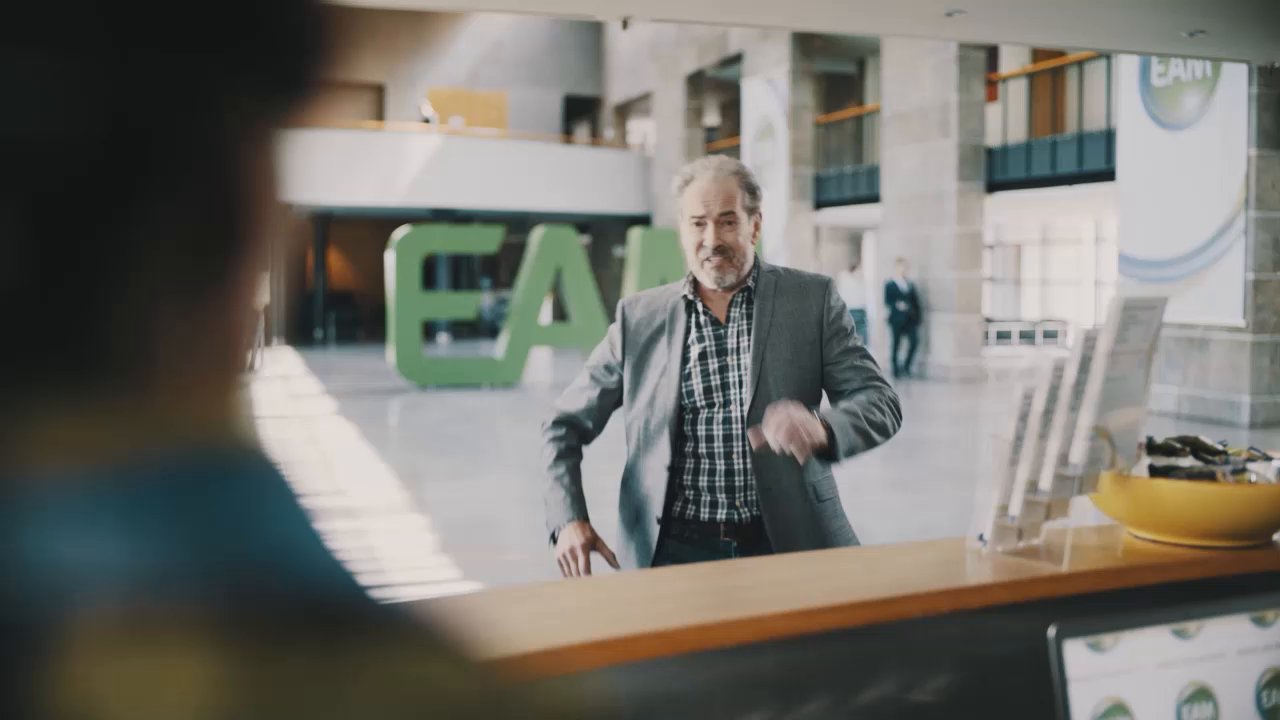
For people in the region, a second important effect emerges: recognition. Their own way of speaking, a familiar accent, perhaps a phrase they've heard countless times before. Because dialect is less common in advertising than perfectly polished standard language, it creates a unique appeal. People listen more closely, categorise it, and might even smile briefly. This perception leads to interpretation, and interpretation, in turn, to stronger recall. Thus, the abstract brand value of 'regional connection' transforms into a concrete idea that combines origin, identification, humour, and high recall. This is Pro-c in a deliberately understated form: none of these decisions reinvents advertising. Yet, together, they transform a correct statement into an idea with genuine character.
AI expands the scope of possibilities
AI can accelerate research, generate variations, visualise ideas, formulate texts, and quickly open up alternative directions. This is immensely useful for professional creatives. The interesting effect, therefore, may not be that AI takes creative work away from us. Rather, it clarifies which part of this work has previously been confused with the production of possibilities: understanding the actual task; choosing a direction; discarding something; connecting two initially separate thoughts; noticing that an idea is still missing something; or recognising that it is already complete and any further improvement would only make it worse. AI can expand the realm of possibilities. Pro-c decides which possibility is worth pursuing.
Big-C can happen. Pro-c is essential.
Clients don't need to buy genius. They need people who can make sound creative decisions even on a normal Tuesday under normal project conditions. Inspiration remains important. Professionalism is demonstrated by not being entirely dependent on it. Experience, curiosity, judgement, and craftsmanship increase the likelihood that, from many possible solutions, one will emerge that has a small but decisive edge over the expected. Perhaps this is the real change brought by generative AI: being creative becomes easier. Working professionally creatively becomes more visible as a result.
Big-C darf passieren. Pro-c ist unser Job.

Relevant projects